
Residential Excavating Done Right: Build Your Forever Home Foundation
Every well-built home starts with what lies beneath the surface. Before framing, roofing, or finishing touches ever begin, the ground itself must be properly prepared to support everything that follows. This early stage of construction determines how well a home resists shifting soil, water intrusion, and long-term structural stress. Residential excavating is not just a preliminary step—it is the backbone of a durable, stable, and lasting home.
For homeowners planning to build a forever home, understanding the importance of proper site preparation is essential. Thoughtful planning, skilled execution, and professional oversight during this phase help ensure that the foundation performs as intended for decades. When done correctly, excavating protects your investment and sets the stage for a smoother construction process overall.
Understand Why Excavating Is a Foundational Step
Excavating is the process that prepares the land to receive a home’s foundation. It involves removing soil, shaping the terrain, and creating a stable base that aligns with architectural and engineering plans. Without this careful preparation, even the strongest building materials can fail over time.
This step ensures that the foundation rests on soil capable of supporting the structure’s weight evenly. Poorly prepared ground can lead to uneven settling, cracked concrete, and structural stress that worsens year after year. Proper excavating minimizes these risks by stabilizing the soil and accounting for natural ground movement.
Beyond structural support, this phase also establishes space for utilities, drainage systems, and access points. These elements must be positioned accurately to ensure the home functions efficiently once occupied.
Evaluate the Property Before Breaking Ground
No two properties are exactly alike, which is why a thorough site evaluation is critical before work begins. Soil composition, moisture levels, slope, and load-bearing capacity all influence how ground preparation should be approached.
Soil testing helps determine whether the land contains clay, sand, loam, or mixed materials, each of which behaves differently under pressure and changing weather conditions. Understanding these factors allows builders to plan excavation depth and reinforcement strategies appropriately.
Zoning laws, environmental requirements, and permit regulations must also be reviewed early. Addressing these considerations before excavating begins helps avoid delays, fines, or costly redesigns later in the project.
Select Equipment That Fits the Project Needs
The success of residential excavating depends heavily on using equipment that matches the site’s size and complexity. Residential projects often require precision as much as power, especially when working near neighboring properties or existing structures.
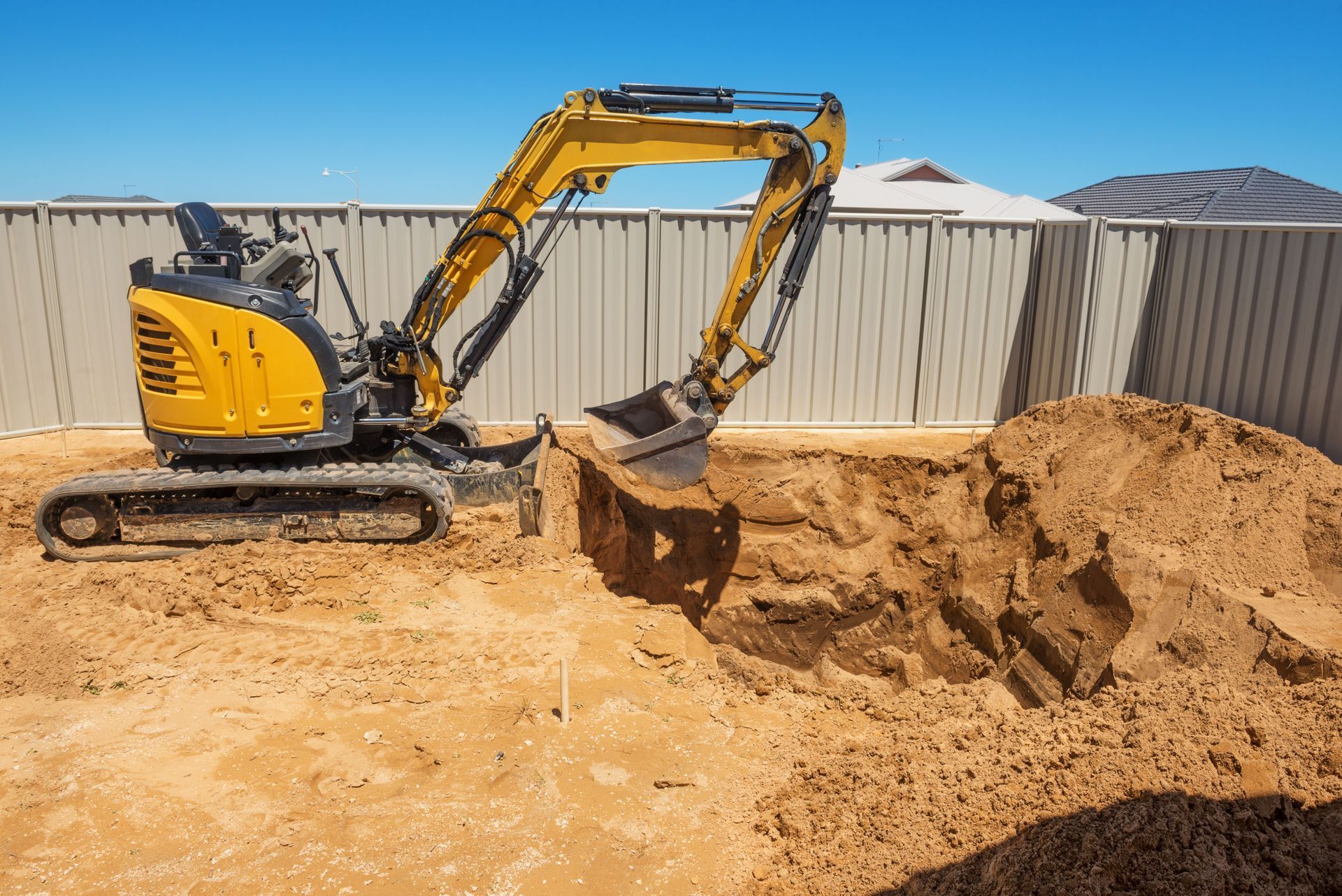
According to FJDynamics, excavator sizes in the US vary widely, from mini excavators like the CAT 300.9D (2,399 lbs) to heavy machinery. Smaller equipment allows for greater control and reduced disturbance, while larger machines are necessary for deeper or more demanding projects.
Professional contractors understand how to choose equipment that balances efficiency with accuracy. This ensures work is completed safely, on schedule, and without unnecessary impact to the surrounding land.
Plan Drainage Solutions During Excavating
Water management is one of the most critical considerations during excavating. Improper drainage can weaken soil, increase pressure on foundation walls, and lead to moisture problems long after construction is complete.
Effective grading directs water away from the foundation, reducing the risk of pooling or erosion. Trenches, slopes, and drainage channels may be incorporated to manage runoff safely and efficiently.
Addressing drainage at this stage is far more effective than trying to correct water issues after the home is built. Proper planning protects the foundation and contributes to long-term structural health.
Determine Proper Depth and Scope Early
The depth and scope of excavating directly affect the performance of the foundation. These decisions must account for soil stability, foundation design, and climate factors such as frost depth in colder regions.
Excavating too shallow can expose the home to shifting and cracking, while unnecessary depth can increase costs without adding value. Engineering plans and geological data guide these decisions to ensure the foundation rests on compacted, reliable soil.
Clearly defining the scope also helps keep the project on schedule and within budget. Well-planned parameters reduce guesswork and prevent costly rework later in the build.
Avoid Common Residential Excavating Mistakes
Many long-term foundation issues trace back to early oversights. One common mistake is assuming soil conditions are uniform across the site. In reality, soil composition can vary significantly, even within a single lot.
Another frequent issue involves failing to identify underground utilities before excavating begins. Damaging water, gas, or electrical lines can cause serious safety hazards and costly delays. Proper surveys and coordination with utility providers are essential.
Inadequate drainage planning is another major pitfall. Without proper water management, soil erosion and moisture buildup can compromise the foundation over time.
Support Long-Term Stability Through Precision
Precision during excavating plays a major role in how well a home performs over its lifetime. Accurate soil removal, proper compaction, and consistent grading all help distribute weight evenly across the foundation.
Modern tools and techniques allow contractors to achieve a high level of accuracy, reducing the likelihood of settlement and cracking. Small deviations during this phase can lead to significant problems later, making attention to detail essential.
When excavating is performed correctly, homeowners benefit from fewer structural concerns, lower maintenance costs, and greater peace of mind.
Balance Traditional Practices With Modern Methods
While traditional excavation techniques relied heavily on manual labor and basic machinery, modern residential excavating has evolved significantly. Today’s contractors often use GPS-guided equipment, laser leveling, and digital planning tools to improve accuracy and efficiency.
These advancements allow work to align more closely with design specifications while minimizing waste and disruption. However, experience still matters—technology is most effective when paired with skilled operators who understand soil behavior and site conditions.
The best results come from combining proven methods with modern innovation, applying each where it adds the most value.
Coordinate Excavating With the Overall Build Timeline
Excavating must be carefully coordinated with the rest of the construction process. Delays or errors at this stage can ripple through foundation work, framing, and utility installation.
Clear communication between builders, engineers, and excavation crews ensures that timelines remain aligned. When site preparation is completed accurately and on schedule, subsequent phases move forward smoothly.
Good coordination also helps control costs by reducing downtime and preventing rework caused by misaligned plans.
Recognize the Importance of Professional Expertise
Residential excavating may appear straightforward, but it requires technical knowledge and experience to execute properly. Professionals understand soil mechanics, equipment limitations, safety protocols, and regulatory requirements.
Hiring experienced contractors reduces risk and ensures the work is done correctly the first time. Cutting corners during this phase often leads to expensive repairs later, making professional expertise a critical investment. Skilled excavation teams also know how to anticipate site-specific challenges before they become costly problems.
A properly prepared site protects the entire structure and supports long-term durability.
Your forever home deserves a strong, stable beginning. Thoughtful planning and skilled excavating lay the groundwork for everything that follows, from the foundation to the final finishes.
By evaluating the site, managing drainage, selecting appropriate equipment, and coordinating schedules, homeowners can ensure their project starts on solid footing. Attention to detail at this stage pays dividends for decades.
If you’re preparing for residential construction and want dependable, professional service from the ground up, Advance Excavating Co is ready to help. Contact our team today to ensure your project begins with precision, care, and confidence.


Share On: